LBJ State Park: two nights, sub-freezing temperatures, and a lesson in preparation
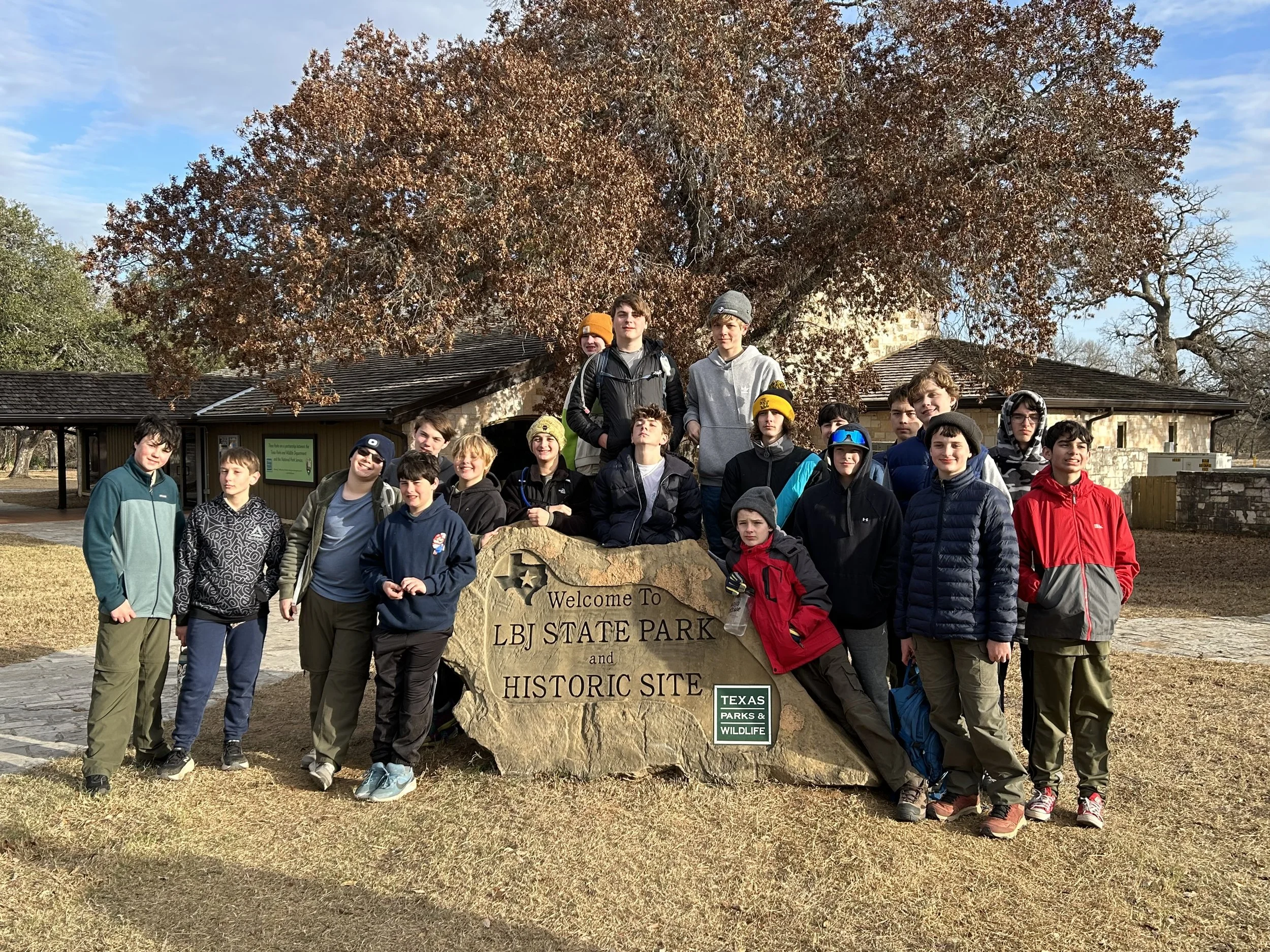
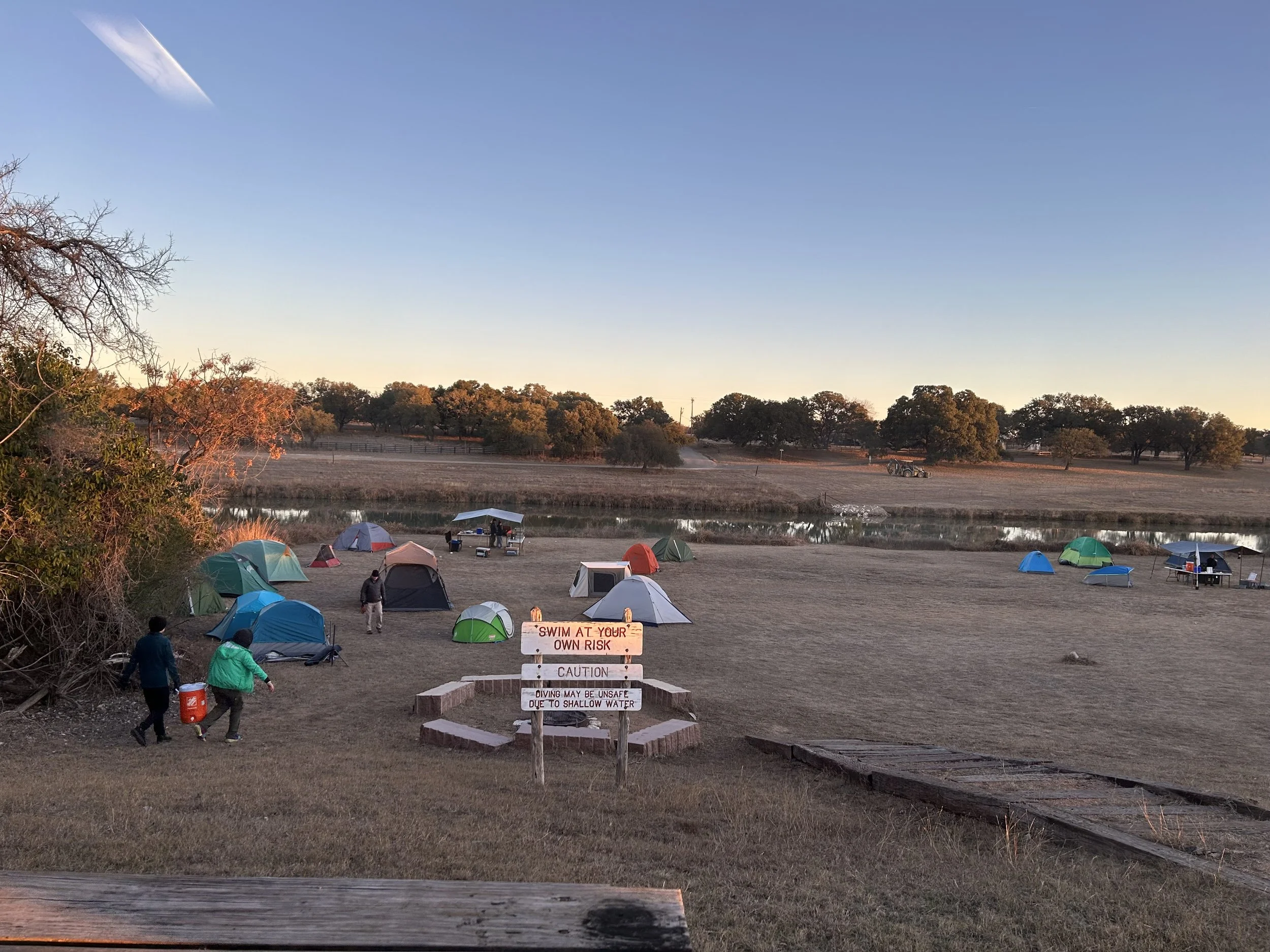
January 17–19 took Troop 478 to the Texas Hill Country for two nights at LBJ State Park. The days were mild and full. The nights were a different story entirely.
The Living History Farm
The first full day took the troop across the road to LBJ National Historical Park's Living History Farm, a working recreation of the kind of Hill Country homestead Lyndon Johnson would have known as a boy in the early 1900s. Interpreters work the land and keep the farm running as it would have been with draft animals, hand tools, seasonal routines, the whole picture. In the mild January sunshine, it is an easy place to slow down and actually pay attention.
The visit puts the outdoor skills Scouts develop in direct historical context. The knots, the fire building, the understanding of terrain and weather were not rank advancement categories to the people who lived on that land. They were how life worked. Walking through a working homestead makes that real in a way no classroom can replicate.
Texas Longhorns and Hill Country wildlife
LBJ State Park is also home to the official Texas Longhorn herd maintained by Texas Parks and Wildlife. This living preservation of one of the state's most iconic breeds is descended from the cattle that defined the ranching economy of the 19th century. The troop got a close look on a warm enough afternoon to linger. There is something about standing near a Longhorn at range distance that recalibrates your sense of scale in a useful way.
Multiple wildlife encounters across the weekend rounded out the natural history piece. The Hill Country's mix of open pasture, cedar breaks, and the Pedernales River corridor creates a habitat that rewards slow, observant movement -- which is a skill Scouting develops deliberately and that pays off on a trip like this one.
Pedernales Falls: Sunday's day trip
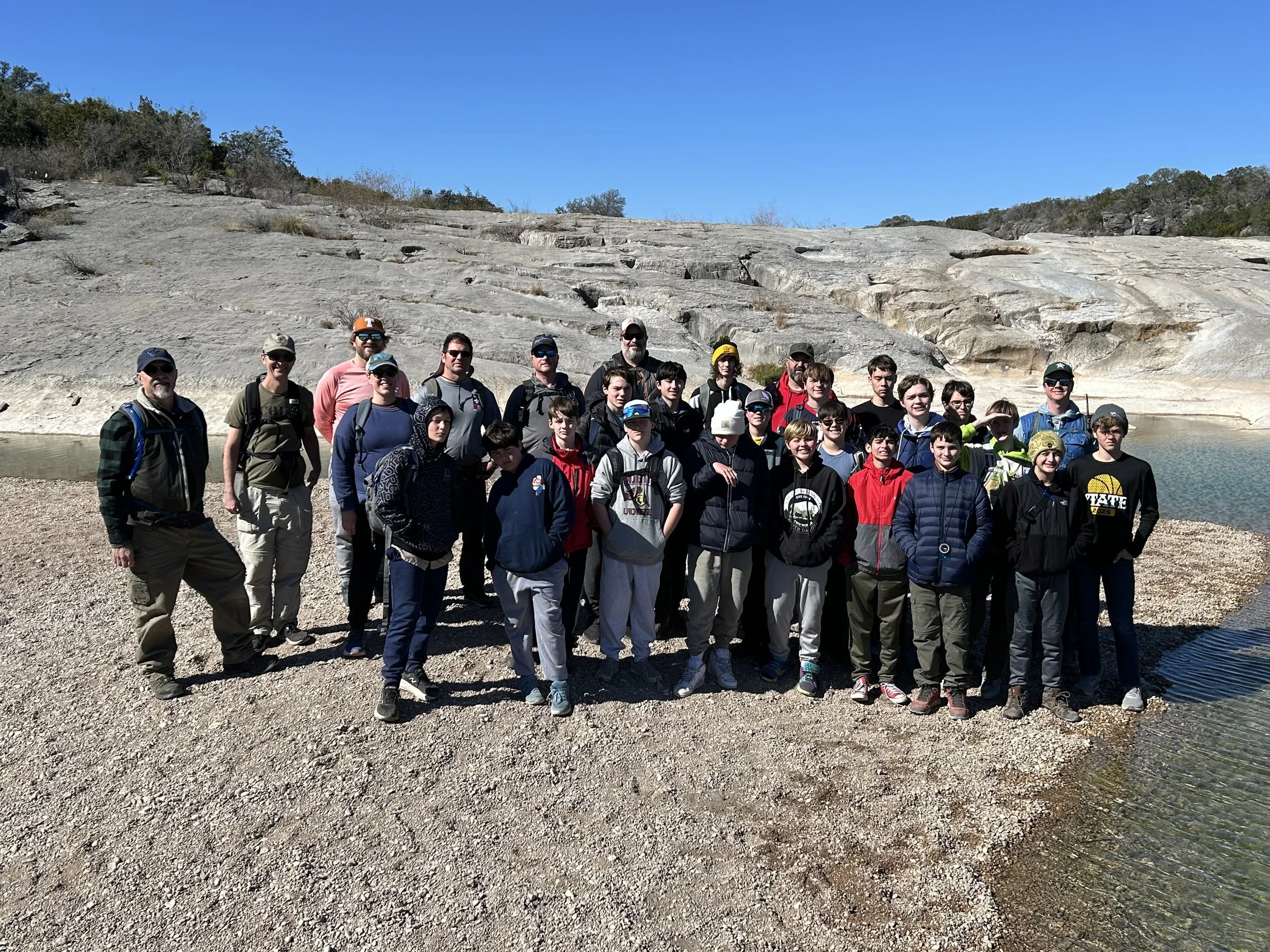
Sunday morning the troop made the short drive to Pedernales Falls State Park for a hike to the falls and a trail lunch. Pedernales Falls is one of the more dramatic natural features in the Texas Hill Country -- a series of limestone cascades where the river drops through layers of rock carved over thousands of years. In January, with clear skies and temperatures climbing back into the sixties by midday, it is a genuinely fine place to spend a few hours.
Lunch on the trail in good weather is one of those simple Scouting pleasures that requires no embellishment. You earned the view. You eat your lunch. You hike back out.
The nights were a different matter
Both nights dropped well below freezing. The days had been mild enough that for some Scouts, the temperature after dark came as a genuine surprise. The gap between what they packed and what the conditions required became apparent as the sun began to set. The adult leadership came through with extra sleeping bags and cold weather gear where the youth fell short which is exactly how it should work. The safety net held, but the lesson landed.
There is no substitute for a sub-freezing night as a teacher of preparation. A Scout who under-packed for a January Hill Country night and made it through with help from a prepared adult is a Scout who will not under-pack again. That is not a failure, it is the program working. The point of a supported outdoor experience is that the consequences of a bad decision are real enough to matter but not so severe that they cause lasting harm. The adults made sure it stayed on the right side of that line.
Why winter camping belongs in the program
Scouting America's outdoor program is deliberately year-round. The skills required for cold weather camping such as layering, moisture management, and sleep system preparation, are distinct from warm weather skills and do not develop without cold weather exposure. A Scout who has only camped in comfortable conditions has only part of the skill set the program is building toward.
Cold nights also build a particular kind of mental toughness that is hard to manufacture in other contexts. Choosing to stay outside when the temperature is dropping, making good decisions about warmth and shelter when you are tired, and waking up having made it through are real resilience skills. They show up later, in other contexts, in ways the Scout may not even connect back to a January campout in the Hill Country.